A Filipino Wedding
A Filipino wedding is a joyful blend of deep Catholic faith, family devotion and fiesta spirit. Grandparents, godparents, aunts, uncles and cousins all play a part, and the celebration often feels like the whole community has come to bless the couple.
Sponsors: Ninong and Ninang
Filipino couples choose principal sponsors, ninong and ninang, respected elders or godparents who witness the marriage and promise to guide the couple through life. Secondary sponsors take part in the most beloved rituals of the ceremony.
Filipino Theme Essentials
- Sponsors: ninong and ninang, the couple’s wedding godparents
- Rituals: the candle, veil, cord and arrhae coins
- Groom: a Barong Tagalog of sheer piña or jusi fabric
- Bride: a white gown or a Filipiniana dress with butterfly sleeves
- Reception: the money dance and the release of doves
Candle, Veil, Cord and Coins
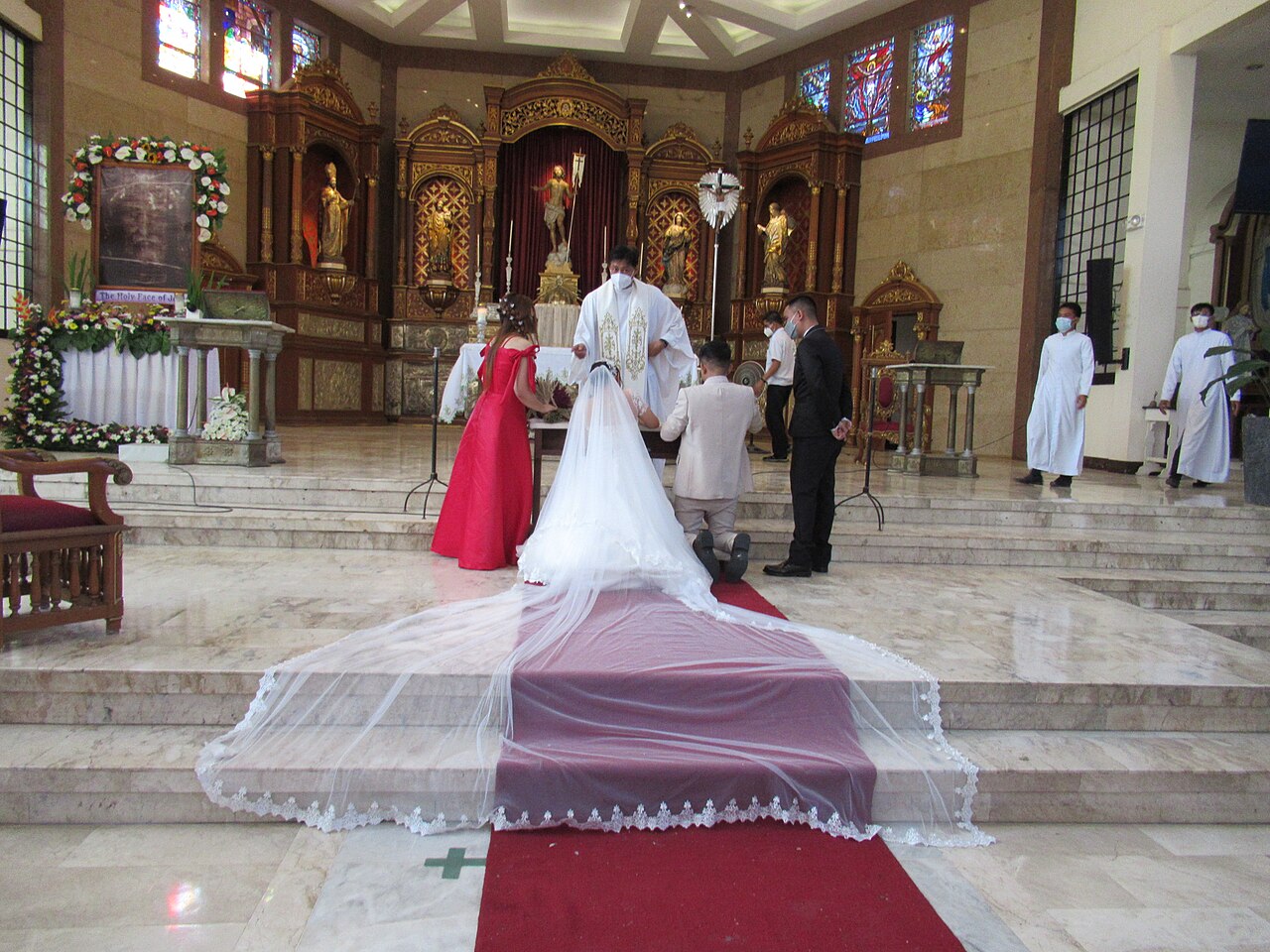
During the Mass, sponsors light unity candles, then drape a veil over the bride’s head and the groom’s shoulders, a symbol of being clothed as one. Next comes the yugal, a decorative cord, often in a figure eight, looped around the couple’s shoulders as a sign of their everlasting bond. The groom presents the bride with the arrhae, thirteen coins blessed by the priest, a promise that he will provide for the family, and she accepts them as a promise to care for their home.
Barong, Filipiniana and the Money Dance
The groom wears a Barong Tagalog, an embroidered shirt of translucent piña pineapple fiber or jusi silk, while the bride may wear a white gown or a Filipiniana dress with dramatic butterfly sleeves. At the reception, guests pin money to the couple during the money dance, a lively way to help them start their new life, and a pair of white doves is released to wish them harmony. In Hawaii, home to a large Filipino community, these customs are cherished at weddings across the islands.